

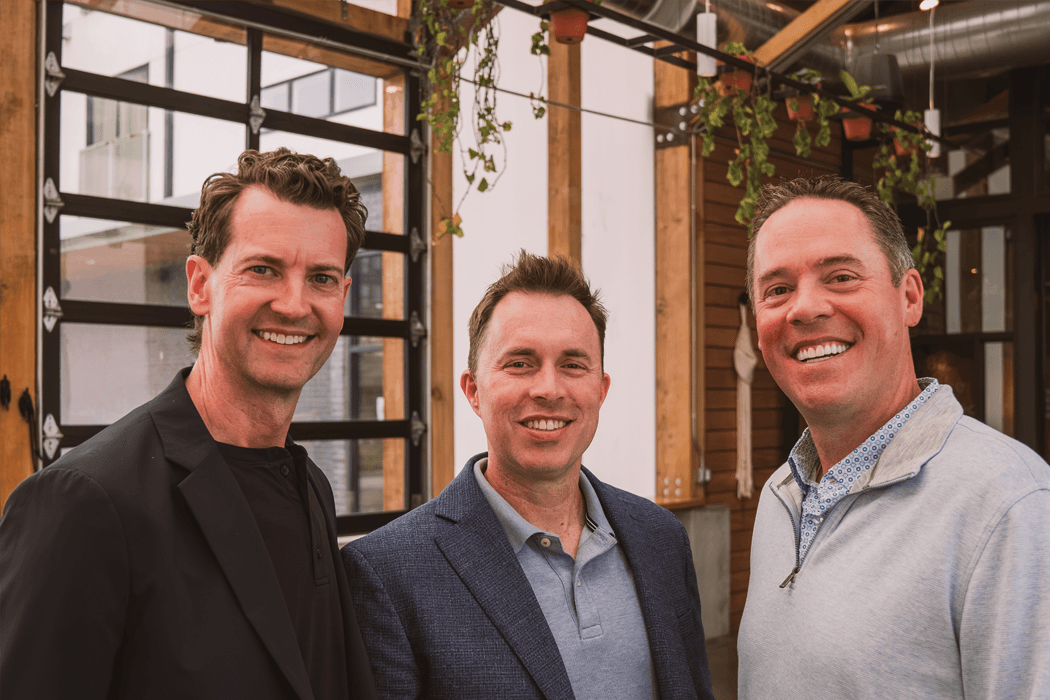
From pediatrics to restorative dentistry, specialists explain how the dental profession continues to evolve to better serve Colorado Springs patients.
- Words
- Josh Skaggs
- Photos
- Ernest Bordon
- Read
- 5 min
- From the issue
- Issue 164
From pediatrics to restorative dentistry, specialists explain how the dental profession continues to evolve to better serve Colorado Springs patients.
Sometimes kids light up when their families drive past Kids Rock Dentistry and Orthodontics and ask if they can stop in. While going to the dentist has long been associated with nerves or hesitation for both kids and adults, that experience is beginning to change. The old stories still exist, but the standard has changed.
Dr. Corban Stettler, founder of Kids Rock Dentistry and Orthodontics, is part of that shift. Today, when parents tell him their kids get upset driving by his office, it is not because they are afraid of going in. It is because they wish they were. The pirate-themed playground may catch their attention, but it is the consistent, thoughtful care that keeps them excited to come back. Many of his patients genuinely enjoy their visits, and that is by design.
“We want to turn the idea of going to the dentist upside down,” he said. “It does not have to be a scary thing.”
Because a child’s worldview is still being formed, Dr. Stettler sees pediatric dental care as particularly suited to this kind of reframing. First impressions matter, and if a good dentist can foster positive experiences early on, these have the chance to steer kids into a lifetime of oral health. Dr. Stettler has experienced this reframing firsthand: as a teenager, he was terrified to get his wisdom teeth removed. A kind and capable dentist helped him overcome his fears and set him on an unexpected career path.
These shifts in perspective matter, but they’re not the full story. The entire field of dentistry is advancing through better applications of science and technology, and specialists across the city are striving to offer better services for the long-term health of their clients.
“Things are different than they were 10, 15 years ago,” said Dr. William “Brad” Perrett of Pinnacle Dentistry. Running a joint practice with Dr. Thomas Jennings in northern Colorado Springs, Dr. Perrett spoke thoughtfully about the changes he’s seen in over twenty years of dentistry. When Dr. Perrett first started in private practice in 2004, patients in need of dental work often faced a choice between a filling, a crown, or an implant. Today, he can offer them a broader range of more conservative options, and new technologies have enabled him to provide same-day indirect restorations.
Beyond evolving treatments, Dr. Perrett has also adapted his overall philosophy, re-evaluating what good reconstruction means. In previous eras of dentistry, replacing teeth with implants was often discussed as a first option, but recent data show that implants are not perfect alternative to natural teeth. Dr. Perrett has pivoted back toward a primary goal of preserving patients’ natural dentition.
He said, “I’ve had to really change my dentistry quite a bit to allow myself to maintain teeth for a much longer period of time than I used to think I could.” He now explains to patients that he intends to preserve their teeth into their 90s.
Dr. Justin Tullis of Southern Colorado Periodontics operates his practice under a similar philosophy, conducting bone and skin grafts in the mouth to save diseased teeth and orient patients toward long-term health. He uses digital imaging to increase diagnostic accuracy and strategize more targeted treatment plans.
“A total digital workflow is a more recent advancement,” he said. “Sticky dental impressions and stone models are being replaced with digital impressions and 3D printing.”
Dr. Tullis has long recognized that oral health is intrinsically connected with the patient’s overall health. When he first stepped away from his engineering career with a multinational corporation and began working as a dentist, people’s wellbeing was his primary motivation: “I wanted to do something more personal and be proud of my career as a healer.”
In addition to his practice, Dr. Tullis volunteers his time to provide dental surgery and care for patients, free of charge. Through Colorado Mission of Mercy (COMOM) and the Dental Lifeline Network, he is able to offer free treatments to those who cannot afford it.
As a periodontist, Dr. Tullis focuses his attention beyond healthy teeth, addressing the gums, tooth alignment and jawbones as well. Gum disease has been linked with heart disease, diabetes, dementia and other ailments, making it more akin to a medical condition than a tooth problem. Treatment requires a perspective that is not focused solely on teeth or cosmetics but rather expands to account for the health of the whole person.
“There is an increasing need for integration between dentistry and medicine,” Dr. Tullis said.
Dentistry has long been considered separate from the rest of the medical system, a separation that is largely due to health insurance designations. Of all the challenges facing the dental profession, high costs continue to be one of the primary barriers to patient care. While expenses have steadily climbed through the years, reimbursement has not increased to match the cost of care. This places an oversized burden on dentists, a burden which is shared by their staff and patients. Many dental offices are unable to accept Medicaid or other forms of insurance, and even patients who are insured face out-of-pocket expenses when their benefits fall short of costs.
For Dr. Stettler, accepting Medicaid and military insurance is non-negotiable. He wants to make his services available to people in a variety of demographics, especially those in the military, whose transitory and high-stress career can compromise consistent oral care. When Dr. Stettler decided to open a second branch of Kids Rock, he considered who would be best served by an additional location. While northern Colorado Springs already had a high density of dental offices, his patients from southern neighborhoods were sometimes driving 45 minutes to visit his office at Woodmen and Powers. He decided to open his second office in Fort Carson, providing an underserved population with easier access to quality dental care.
Dr. Stettler is not alone in his desire to provide quality, equitable care. Dentists throughout the city are dedicated to doing their best work for the Colorado Springs community. Since 2004, continuing education groups have provided opportunities for dentists to meet with like-minded peers and learn from each other on a monthly or bi-monthly basis. Professional speakers bring in specialized expertise, and dentists find a setting in which they can readily share information and learn from each other. While some cities have a reputation for unhealthy competition among dental offices, Colorado Springs is known for its culture of mutual respect, in which dentists are willing to collaborate and share information.
In recent years, medical professionals have faced growing pressure to increase their patient load at the expense of human interaction. Despite this trend, Dr. Perrett sees the dental community as a place where human interaction is still valued. Dentists still have the freedom to connect with patients as people.
“Dentistry has always been a creative profession,” he stated. “It’s always required personalized care … Going forward, I hope that’s still true about our profession.”
Keep reading
Wellness
Inspirational Doctor of the Year
Celebrating the Extraordinary Contributions of Local Physicians
By Mike Regennitter3 min read
Wellness
Breaking the Silence
Reshaping the conversation on men’s mental health is a compassionate alternative to the silence that has endured for generations. Inherent Self creates space for men to be seen, heard and supported.
By Alyssa Shikles4 min read

Wellness
Bringing Light to Bone Health
A Silent Threat That Affects Millions.
By Theresa Woods5 min read