

An Olympian On And Off The Field.
- Words
- Josh Skaggs
- Photos
- Meegan Dobson
- Read
- 4 min
- From the issue
- Issue 158
If you have lived in Colorado Springs for some time, chances are you have walked past one without realizing it. That young woman charging past you up the Manitou Incline might be one. Ditto, that guy running way too many laps around the park. On hiking trails throughout the city, at a downtown coffee shop, at the gym, there they are: Olympians.
Olympians has a mythic aura to it—and no wonder, since it originates from Mount Olympus, gathering place of the Greek gods. But here in Olympic City, the mythic has become a part of our ordinary. Every day, resident Olympians and Olympic hopefuls train at the US Olympic and Paralympic Training Center, the largest training center of its kind in the United States. Meanwhile, thousands of weekly visitors flock to the US Olympic and Paralympic Museum in downtown Colorado Springs. They test their archery abilities on simulations and race against a projected image of Jesse Owens, commemorating some of the greatest athletes who ever lived.
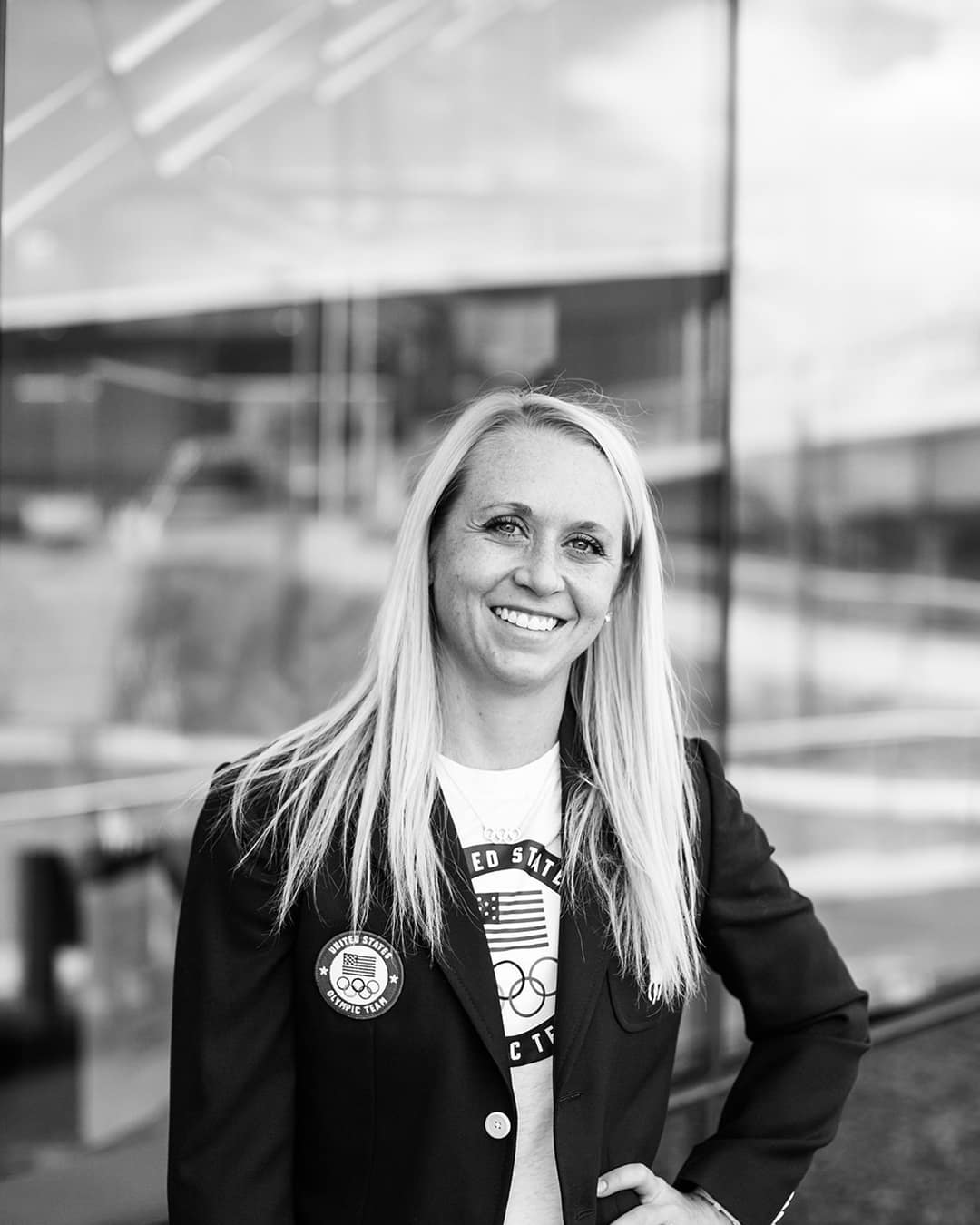
Visitors to the museum might also run into Samantha Schultz. An Olympian herself and frequent collaborator during special events at the museum, Samantha knows that the title inspires a certain level of awe. (During a recent shift at the museum, she was surprised when a woman who met her immediately burst into tears.) Even so, Samantha is more interested in what she shares in common with others in the community rather than what sets her apart. “I’m just like you,” she said. “I hope I can bring some normalcy to it.”
Samantha made her name competing in the modern pentathlon in the 2020 Olympics in Tokyo. Modern pentathlon is a sport that tests athletes at multiple levels, combining fencing, freestyle swimming, pistol shooting, equestrian show jumping, and cross-country running. Having grown up in Littleton, Colorado, Samantha had long enjoyed swimming, riding horses, running, and hunting. A Colorado upbringing proved an ideal incubator for a pentathlete; the only thing she needed to add was fencing.
She began learning to fence and training in earnest, and by the time the 2016 Olympics rolled around, Samantha had proven her abilities enough to go to Rio as an alternate. She enjoyed taking part in the festivities, but she wished she were able to join Team USA on the field. Returning home from that experience, she was determined to do whatever it took to compete in the next Olympics.
It would be an uphill battle. In the coming years, Samantha endured multiple injuries, some of which required surgery and unplanned downtime. She persisted in her training, despite multiple setbacks. Then COVID hit, and the Tokyo Olympics were pushed back a year. This meant that Samantha had to train for an additional year, often without access to in-person coaching or training facilities. To this day, her ability to persevere through those setbacks is what she is most proud of in her career. She made it to the Tokyo Olympics, and though she didn’t medal, she was pleased with her performance and grateful for the chance to compete.
But then she had to return home—back to Olympic City—where she would have to decide what the future held. She had spent the past 12 years working toward a singular goal. When that goal was removed, who was she? Was she still an Olympian? And how did that identity transfer to life off the field?
“Going into a new career when you’re 30 isn’t easy to do,” Samantha recalled. “I was afraid to give that up.”
As she processed and talked with her loved ones, however, she recognized that she was more than an athlete, and that she had other dreams that were worth pursuing. She decided not to train for the next summer Olympics.
Around that time is when she began to work with a therapist—something she’d resisted in previous years. As she took stock of where she was in life, she began to realize that her laser focus had come at the cost of other parts of her life. For years she had missed baby showers, weddings, and other important events in her wider community. Her health had also suffered: relentless training had damaged her relationship with food and exercise. She came to recognize that things some coaches considered “normal” in the athletic world—for example, a female athlete missing her period for years at a time—were not necessarily healthy from a broader perspective.
“I had to figure out a better balance with my life,” Samantha recalled. “I am more than just an athlete. I’m a daughter. I’m a sister. I’m a wife. I’m a friend.”
As she began to apply herself in new areas, she found unexpected joy. Working with a therapist became part of her expanded view of training, one which took into account a more holistic version of what it means to be an athlete—and an Olympian.
Colorado Springs is a community that supports Olympians, but that investment goes both ways. Samantha was eager to sow back into the community that had supported her for so many years. She started working as a certified personal trainer and a Pilates and yoga instructor, coaching others in their endeavors. Today, she brings her broader ethos to her work, hoping to inspire her clients to persevere through challenges and find joy in movement. She also spends hours a week at the Olympic and Paralympic Museum, meeting visitors and taking part in larger events.
“It’s been really rewarding,” Samantha said.
In Olympic City, it’s easy to focus on what Samantha calls the “highlight reel”—the moments of victory, the medals, the chance to stand on a pedestal. But in between those moments are years of showing up for the hard work, most of which goes largely unnoticed. Samantha is a member of that rarified group we call “Olympians,” but she sees herself as no different from the other athletes she now works with. The lessons she’s learned as an Olympian can be applied to any person who pursues a dream.
Keep reading
Culture
Where Everybody Wins
Yobel/The LookUp Gallery provides Clay Ross the space for patrons to come in and find something they love. And, through conversation and shared experience, he hopes they find much more.
By Pam Bales6 min read

Culture
Breaking Barriers With Beats
Using music to combat the mental health crisis by reimagining the way independent artists create, inspire and entertain locally.
By Tisha Olson4 min read
Culture
More Than A Restaurant
Every time a train passes Brakeman’s Burgers, a bell rings—and pickle shots are poured.
By Alyssa Shikles4 min read